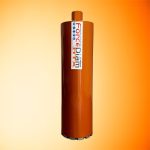
 HTX
HTX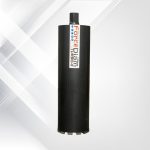 Turbo-X
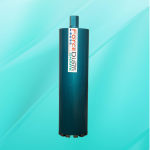 Shark
Shark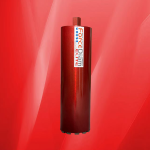 Elite
Elite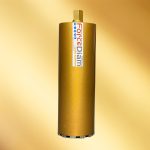 Gold Edition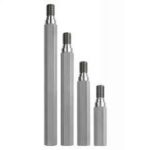


How to choose the right reinforced concrete core bit?


When a core bit starts to struggle in reinforced concrete, the problem is almost never just with the machine. Most of the time, the choice of consumable makes the difference between a cleanly executed hole and a job delayed by vibrations, blunt segments or blockages in the reinforcement. If you want to know how to choose a core bit for reinforced concrete, the right criterion is not only the diameter, but the combination of material, working regime, compatibility and segment type.
In reinforced concrete, the core bit is working simultaneously in two materials with different behaviour – hard mineral matrix and steel. For this reason, a choice made “by eye” may seem acceptable on the first hole and expensive after a few passes. A good core bit for a construction site is not automatically good for intensive structural work, and a core bit that works well in unreinforced concrete can quickly lose efficiency when repeatedly entering steel.
How to choose a core drill bit for reinforced concrete without compromise
The first filter is the actual application in the field. Do you need to drill HVAC penetrations, electrical runs, anchors, pipe holes or large diameter cores in structural elements? The frequency of use completely changes the choice. For occasional work, the emphasis may be on versatility and controlled cost. For daily use , the feed rate, stability in reinforcement and the life per meter cored are more important.
The second question is related to the working regime – wet or dry. In reinforced concrete, wet coring remains the standard solution for productivity and thermal control. Water cools the segments, evacuates dust and reduces the risk of glazing. Dry coring can make sense in certain interventions, but requires a core designed for this regime and more careful control of the working rhythm. If you choose wrong here, wear appears quickly and the yield drops immediately.
Another critical point is the type of machine used. The engine power, speed and whether you are working with or without a stand directly influence which core bit you can use effectively. A large core bit mounted on an undersized machine will run slowly, load the segments and put unnecessary stress on the transmission. Conversely, a powerful machine operated with a core bit that is not suitable for the material can cause accelerated wear or unstable cutting.
The diameter is not chosen only according to the final hole
In practice, many start with the required diameter and stop there. It is a good start, but not enough. When making penetrations for pipes, cables or ducts, one must also take into account the installation tolerance, the possible sleeve, the protective layer and the situations in which the hole must allow for quick adjustments in the field. A choice that is too tight can complicate the installation. One that is too large can require unnecessary remediation.
At small and medium diameters , control is usually better, and execution speed can be increased if the segment is chosen correctly. At large diameters, other variables come into play – equipment stability, stand fixation, feed pressure and efficient material evacuation. The larger the diameter, the more important it becomes to have a balanced core bit for reinforced concrete, not just a generic diamond segment tube.
The depth of the core drilling also matters. For standard thicknesses, a standard length may be sufficient. For thicker walls or floors, you either need a suitable core drill from the start, or compatible extensions and accessories. This is where a lot of time is lost on the construction site – not because of the core drill itself, but because of an incomplete setup.
The diamond segment makes the difference in reinforced concrete
If you had to choose one technical criterion with a direct impact on the result, it would be the segment. In reinforced concrete, the segment must consistently cut both the hard aggregate and the iron, without binding or wearing down abnormally quickly. This means a balance between the hardness of the metal bond and the ability to expose the diamond as the segment works.
A segment that is too soft may seem aggressive at first, but it can wear out quickly, especially in intensive work and dense reinforcement. A segment that is too hard may seem to last longer, but it may start to slip on the material, heat up and lose efficiency. Therefore, there is no such thing as a “one size fits all” core bit in the real sense. There is a core bit that is right for the type of concrete, the level of reinforcement and the pace of work.
Segment geometry also matters. Depending on the design, some segments evacuate drilling mud better, others offer superior stability when meeting steel. For professionals who work in reinforced concrete every day, the difference is clearly visible in constant feed and fewer interruptions.
Compatibility between core bit, grip and equipment
One of the most common mistakes is choosing a good core bit that is incompatible with the machine or the accessories provided. The clamping thread should be checked before ordering, not after you arrive at the construction site. Likewise, you need to know if you are using adapters, extensions or special fastening systems that can influence the rigidity of the assembly.
In reinforced concrete, small gaps become big problems. An imperfect connection can generate vibrations, uneven wear and an increased risk of jamming. For large diameters or when coring in heavily reinforced elements, system rigidity is as important as segment performance. If the assembly is not properly configured, no premium core bit will fully compensate for the lack of stability.
The recommended diameter range for the core drilling machine should also be checked. Not all equipment works efficiently on every size. Especially for repetitive work, choosing the right machine-core pair protects both your consumables and your engine.
How to recognize a core drill suitable for professional work
A professional reinforced concrete core bit is evident in its construction and behavior. The tube should have good rigidity, the segments should be welded or clamped for real stress, and the overall finish should show manufacturing control, not compromise. In the field, good signs are consistent cutting, predictable entry into the material, and a stable response when encountering reinforcement.
Equally important is how it performs after several holes, not just the first time it is used. A properly chosen core bit maintains a good balance between speed and durability. You don’t have to constantly “force” the feed, nor compensate with excessive pressure for what the segment is not doing effectively.
If you frequently work on sites where the composition of the concrete varies, it is worth choosing a solution oriented towards controlled versatility, not extremes. If, on the other hand, you have repetitive applications, with similar diameters and a known structure, you can much better optimize the choice based on the exact specifics of the job.
Common mistakes when choosing a core drill for reinforced concrete
The most common mistake is choosing by price, without reference to the real cost per job. A cheaper, but slow or highly worn core bit quickly becomes more expensive than a professional version that maintains constant performance. The second mistake is ignoring the reinforcement. Reinforced concrete does not just mean “stronger concrete”, but a mixed material that requires a segment suitable for repeated contact with steel.
There is also the choice of the correct diameter but the wrong length, which leads to improvisation with accessories. The same category includes using a wet core bit in dry mode or vice versa. The problem is not only the decrease in performance, but also the accelerated loss of segments.
Another mistake is incorrect feed. Even a well-chosen core bit can work poorly if it is pressed too hard or, conversely, held too loosely in the material. Efficient coring in reinforced concrete requires the right pace, proper cooling and stable equipment.
When is it worth asking for technical advice?
If you have to choose between several closely spaced diameters, if you are working in concrete with dense reinforcement or if you want to fit a new core bit to an existing equipment, technical advice greatly shortens the process and reduces the risk of making the wrong choice. The same applies when you have special applications – large diameter holes, intensive successive core drilling or combinations of adapters and extensions.
For a professional, the time wasted with an unsuitable consumable costs more than the price difference between two well-selected options. That is why it is worth choosing from a specialized offer, where the discussion starts from the material, reinforcement, machine and work pace.
At ForceDiam Ireland, we help contractors, drilling companies and trade professionals choose the right diamond core drill bits for real construction applications. Our focus is on reliable products, practical advice and professional drilling solutions across Ireland.
The right choice does not always mean choosing the most expensive core bit in the range. It means choosing the product that offers stable cutting, controlled wear and full compatibility with your equipment.
When the consumable is right for the job, the work becomes cleaner, faster and more efficient.
Explore our professional diamond core bits in Ireland. Need help choosing the right product? Contact ForceDiam for advice, orders and product information.